Essential Books on Economic Miracles and Crises
Why do some economies grow spectacularly while others collapse? These books examine both sides: the Asian development miracles that rewrote economic theory, and the financial crises — the Great Depression, the 2008 crash, Latin America's lost decades — that revealed the system's fragility. Read together, they form the essential economic history of the past century.

Decoding Japan
History, Geography, Culture, Politics, and Economics — Five Lenses on the Indispensable Nation of Asia
Understand Japan through five lenses: history, geography, culture, politics and economics.
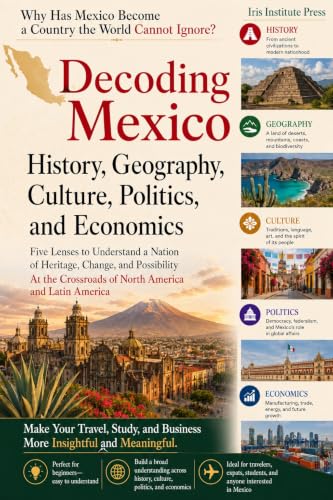
Decoding Mexico
History, Geography, Culture, Politics, and Economics — Five Lenses on the Real Mexico
From Aztec heritage to nearshoring: understand modern Mexico through five analytical lenses.
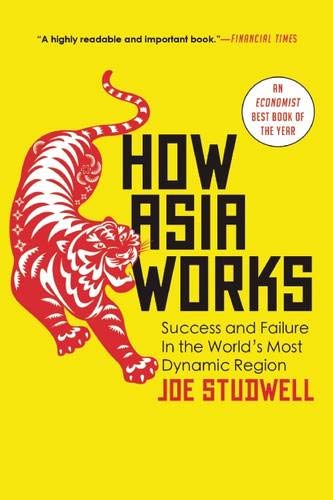
How Asia Works: Success and Failure in the World's Most Dynamic Region
Why did Japan, South Korea, and Taiwan industrialize so fast while the Philippines, Indonesia, and Thailand did not? Studwell's answer — land reform, industrial policy, export discipline — is the most persuasive account of development economics written in a generation.

Lords of Finance: The Bankers Who Broke the World
Pulitzer Prize–winning history of the four central bankers — Fed, Bank of England, Banque de France, Reichsbank — whose decisions in the 1920s caused the Great Depression. A masterclass in how monetary policy and individual psychology interact to shape history.

Crashed: How a Decade of Financial Crises Changed the World
The definitive global history of the 2008 financial crisis and its decade-long aftermath — from Wall Street to Beijing, Frankfurt to Athens. More comprehensive than any other account, and essential for understanding why the crisis remade the political order as well as the economic one.

The Big Short: Inside the Doomsday Machine
How a handful of contrarians saw the 2008 housing bubble collapse coming and bet against it. Lewis makes the mechanics of credit default swaps accessible — and his moral outrage at the system's institutionalized dishonesty gives the book its urgency. Basis for the Academy Award–winning film.

Bad Samaritans: The Myth of Free Trade and the Secret History of Capitalism
Cambridge economist Ha-Joon Chang argues the free-trade prescriptions rich nations impose on developing countries are the opposite of what those nations did to get rich. Uses Japan, South Korea, Finland, and the U.S. as counter-evidence to Washington Consensus orthodoxy.

Why Nations Fail: The Origins of Power, Prosperity, and Poverty
Why are some nations rich and others poor? Acemoglu and Robinson argue the answer lies in political and economic institutions — inclusive versus extractive — not geography or culture. One of the most influential economics books of the 21st century, drawing on cases from Japan and Mexico to sub-Saharan Africa.
As an Amazon Associate I earn from qualifying purchases.